Observation Notes
Common Names: Common Indian Tree Frog, Indian Tree Frog, Chunam Tree Frog
Scientific Name: Polypedates maculatus
Malayalam Name: മരത്തവള (Marathavala) / Tree Frog
Origin: Indian Subcontinent and South Asia
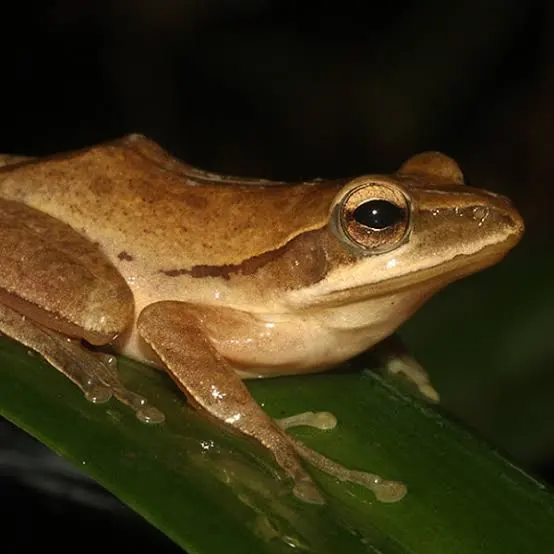
The Common Indian Tree Frog (Polypedates maculatus) is a medium-sized arboreal amphibian belonging to the Rhacophoridae family, commonly known as the Asian tree frogs. It is one of the most recognizable frogs found across India, Sri Lanka, Nepal, Bangladesh, and parts of Southeast Asia. In Kerala, this species is a familiar sight during the monsoon season, often observed near ponds, vegetation, home gardens, and agricultural landscapes.
Unlike ground-dwelling frogs, the Common Indian Tree Frog is specially adapted for climbing. Its long limbs and adhesive toe pads allow it to move efficiently across leaves, branches, walls, and wet surfaces. Body colour varies considerably, ranging from brown and grey to olive or lightly patterned shades, helping the frog blend into surrounding vegetation.
Adult frogs typically measure 4–7 centimetres in length. Males are generally smaller and are best known for their loud, rhythmic calls during breeding season, particularly after rainfall. The species lays eggs within foam nests attached to vegetation or surfaces above water. Once hatched, tadpoles drop into nearby water bodies to continue development.
As an insectivorous amphibian, the Common Indian Tree Frog feeds primarily on mosquitoes, moths, flies, beetles, and other small insects. This natural feeding behavior makes it highly beneficial to farms and gardens by helping regulate insect populations without chemical intervention.
Environmentally, tree frogs are extremely important. Amphibians are widely regarded as bioindicators, meaning their presence often reflects healthy ecosystems and good environmental quality. The Common Indian Tree Frog contributes to ecological balance through natural pest control, food-chain support, and biodiversity maintenance. At the same time, frogs themselves provide food for snakes, birds, and other predators.
At Flora Hills, the gentle evening calls of the Common Indian Tree Frog are part of the landscape’s living soundtrack. Frequently seen resting among leaves or appearing after rain, this small amphibian reminds us that healthy ecosystems are not measured only by trees and plants, but also by the quiet life they sustain.
Why this matters
Every bird, butterfly, insect or pollinator noticed at Flora Hills is a small sign of ecological change. As trees mature and the land becomes more diverse, these observations help record how life returns, adapts and grows with the landscape.